
There is a wide range of investment instruments available in the market based on different investor requirements and goals.
Two such options we are going to talk about today are sectoral funds and alternative investment funds (AIFs).

Both these funds differ from standard equity funds and offer a concentrated and sophisticated approach, respectively. In this article, we will cover more about sectoral funds vs alternative investment funds, their structures, risk profiles, and more.
What Are Sectoral Funds?
Sectoral funds are mutual funds that invest in specific sectors. They adopt a concentrated approach, unlike broader equity funds, which offer a diversified approach. These funds allow investors bullish on particular industries to put their money where their mouth is, whether that’s technology, healthcare, banking, or consumer goods.
Key Features of Sectoral Funds
Sectoral funds concentrate investments within their target sector, giving investors an opportunity to focus on industries they believe will outperform the broader market.
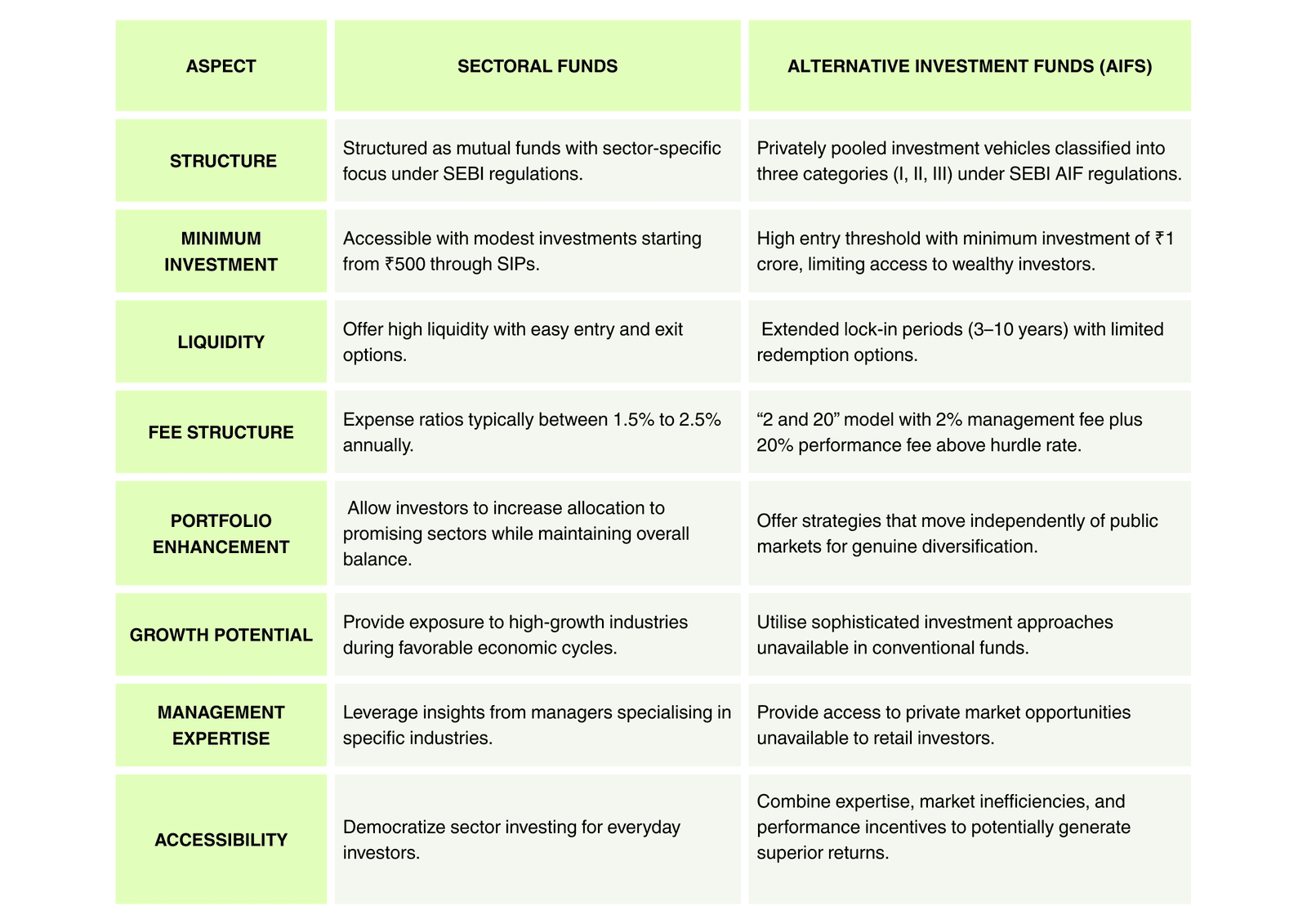
In India, these funds operate under SEBI’s oversight, following the same regulatory framework as other mutual funds to ensure transparency and protect investor interests.
These funds offer straightforward entry and exit with modest minimum investments (typically starting at just ₹500 monthly through SIPs), making them accessible to nearly anyone with investment aspirations.
They charge slightly more than diversified funds. Expense ratios typically range between 1.5% to 2.5% annually.
Rather than measuring themselves against broad market indices, these funds compare performance against sector-specific benchmarks, offering a more meaningful assessment of their actual performance.
What Are Alternative Investment Funds?
Alternative Investment Funds gather money from sophisticated investors and deploy it according to specialised investment strategies. These funds venture beyond the familiar territory of mutual funds, exploring diverse approaches across multiple asset classes that typically remain inaccessible to all but institutional investors.
SEBI classifies AIFs into three distinct categories:
Category I funds support startups and socially beneficial ventures
Category II funds (the most common variety) include private equity, debt funds, and real estate funds
Category III funds employ complex trading strategies, often with borrowed capital.
Key Features of Alternative Investment Funds
These funds establish a substantial entry threshold of ₹1 crore minimum, limiting participation to those with significant financial means.
Most AIFs restrict access to your capital for extended periods, typically 3-10 years, making them more like a long-term commitment than a flexible arrangement in investment terms.
They implement a “2 and 20” fee structure (2% annual management fee plus 20% of profits above a certain threshold), creating an alignment where managers prosper when investors succeed.
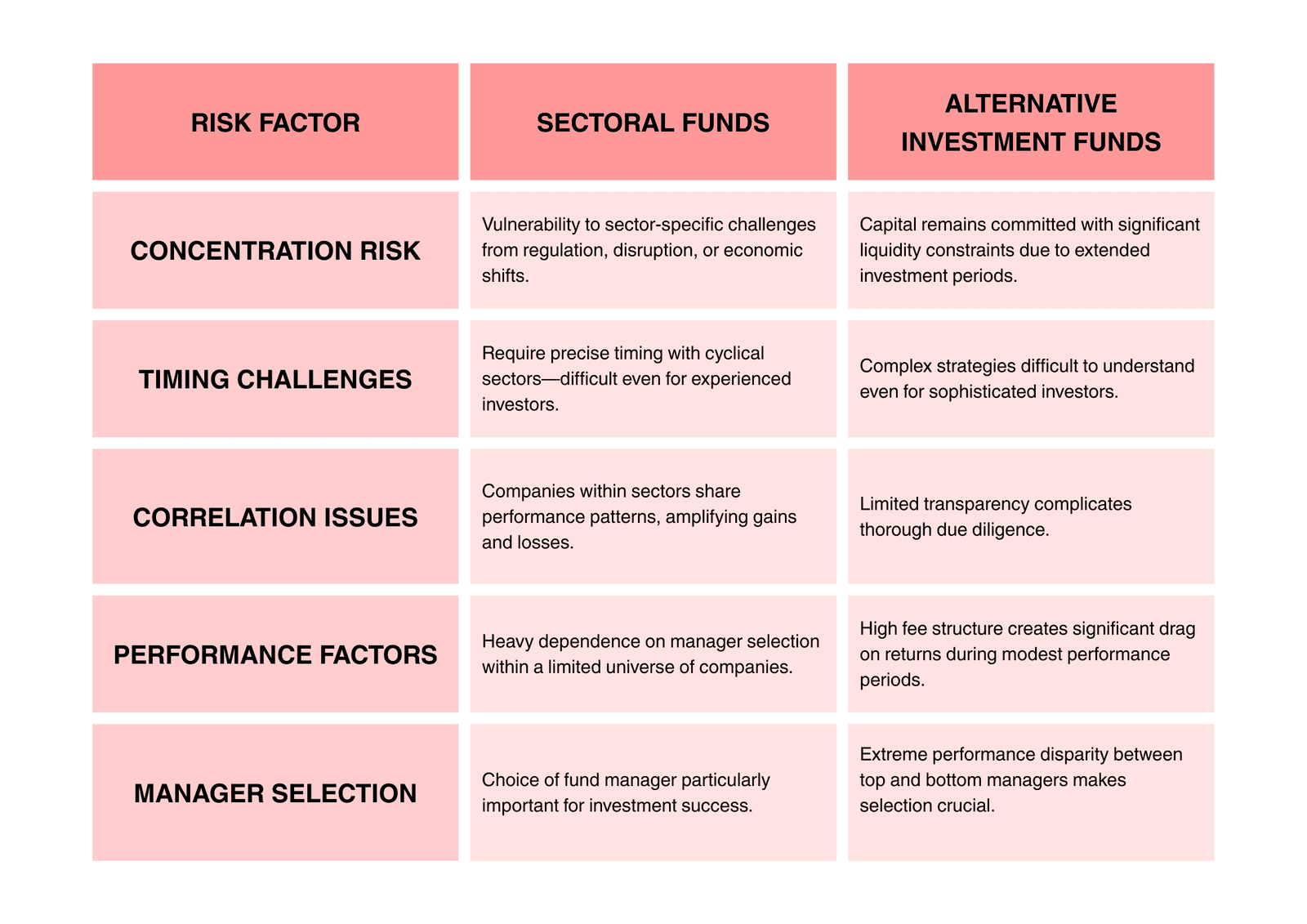
While they operate under SEBI regulations, AIFs enjoy greater flexibility regarding disclosure requirements, which may provide investors with less transparency into their operations.
Sectoral Funds vs Alternative Investment Funds: Benefits and Risks Comparison
BENEFITS
RISKS
What Should Investors Choose?
Let’s understand which investment option investors should choose.
Suitable Investors for Sectoral Funds
Sectoral funds suit growth-oriented investors with strong convictions about specific industries based on thoughtful analysis of structural trends or cyclical opportunities.
They work well for investors who maintain a core diversified portfolio but wish to allocate a portion, typically 10-20% of equity exposure, to sectors they believe will outperform.
Given the volatile nature of sector performance, investors should plan to remain invested for at least five years and possess sufficient risk tolerance to withstand significant fluctuations along the way.
Active investors willing to monitor sector developments and adjust allocations as conditions evolve position themselves to maximise benefits while managing risks effectively.
Suitable Investors for Alternative Investment Funds
AIFs address the needs of affluent investors with substantial financial resources beyond their foreseeable requirements.
Their complexity demands considerable financial sophistication and the capability to conduct comprehensive due diligence on fund managers, strategies, and operational infrastructure.
Investors seeking assets that maintain independence from public markets during turbulent periods may benefit from allocating to selective AIFs.
It also requires a long-term investment horizon.
Conclusion
Sectoral funds and alternative investment funds offer distinct opportunities for different investor profiles. Sectoral funds provide accessible, liquid exposure to specific industries for investors wanting to express strategic views. On the other hand, alternative investment funds offer sophisticated strategies and private market access to qualified investors who are willing to accept illiquidity and complexity.
The right choice depends on your individual circumstances, including financial resources, investment goals, risk tolerance, and investment knowledge.